
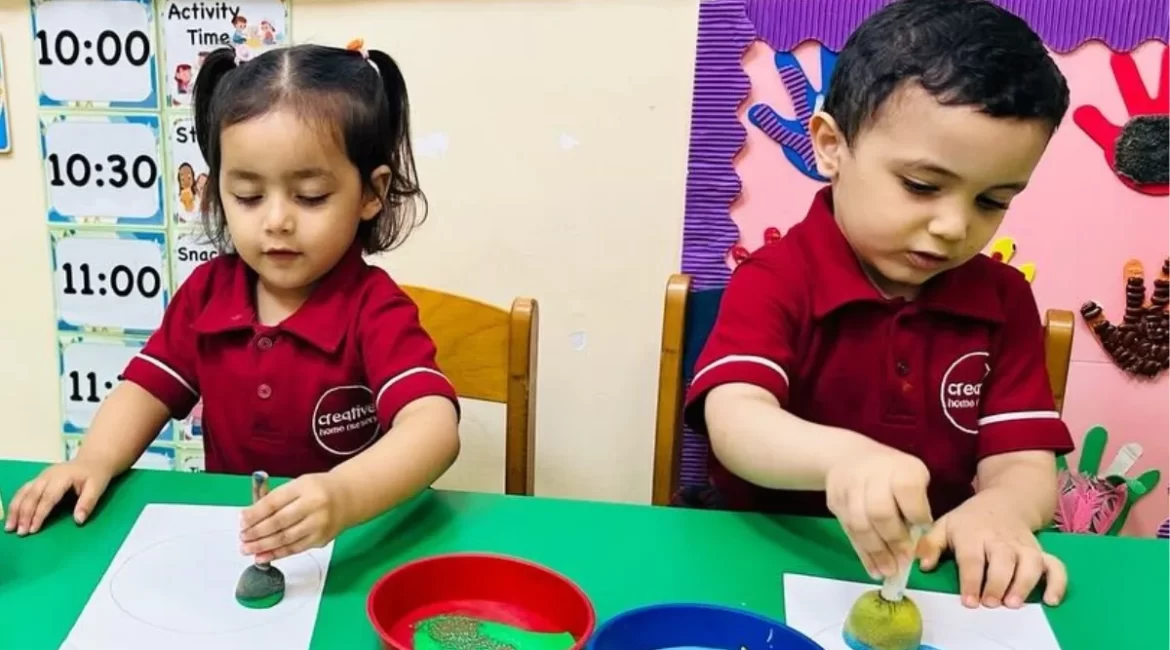
The Impact of Consistent Routines In Preschoolers Growth and Learning
Nurturing and encouraging a child with developmental needs in a facility is not an easy task, finding a quality nursery in Sharjah pertaining to such concerns can be overwhelming. The parents aim at giving their children the best for practice and preparation for future learning would be the best approach. One of the most helpful elements that quality nurseries near me approve to aid in preschooler development is astonishingly simple routine work.
Setting Consistent Routines in Preschoolers may seem like simple scheduling for a day, but a day plan serves as the underlying plan of stability upon which the younger minds can grow. Predictable days help preschoolers to foster confidence, independence and life skills useful outside the preschool.
We at Creative Home Nursery have seen anxious and apprehensive toddlers in rigid routines foster into confident, eager learners. The benefits of such predictable formatting work outside of child organization as well. The emotional, cognitive, and social development gained prove to be beneficial during the educational journey of the child.
Enhancing preschoolers’ learning with practices at home and consistent routines in preschoolers can help parents make more informed choices when selecting the right playschool nearby.
Benefits of Consistent Routines in Preschoolers
Emotional Security: Predictability Reduces Anxiety
A small kid feels the world to be a place of strange and frightening situations. A nursery near you gains the emotional system support to help preschoolers gain more secure and self-assured inline with the systematic and watertight order that the preschool implements to its daily activities routines.
The reason why schedules lower anxiety is what is known what is coming, hence, mental energy is not used to prepare for the anxiety provoking unknown. Instead, anxiety is used to learn, explore, and grow. Children who attend a quality preschool in Sharjah that maintain mental vivacity and have well structured routines, are less behaviorally challenged and more adept at their emotional control and regulation.
Cognitive Development: Enhances Memory and Focus
A day of routine is powerful, and though routine is powerful, frequently invisible, structures of the mind. Daily activities that are planned and scheduled enhance the memory and executive function of preschoolers, therefore strengthening the self control and retention of memory neural pathways.
Predicting what comes next in an activity aids children in honing their sequencing skills. These abilities will be critical in following multi-step directions, understanding stories, and organizing thought processes in future academic endeavors.
Consistent Routines in Preschoolers allow them concentrate on productive tasks and are devoid of mental distractions. Children can engage in more complex activities, like puzzles or art, rather than routine thinking.
Social Skills: Fosters Collaboration and Kindness
Cluster routines provide preschoolers opportunities to enhance social skills which will be critical for future group work. Children learn to wait, share, and consider others when engaged in circle time, group cleaning, and eating together.
Routines assist a child in understanding their individual responsibility within a social structural system. Children learn that their actions can impact others, and that working together makes a task easier. These concepts of social moral obligation are essential for developing empathy and kindness.
Consistent Routines in Preschoolers That Support Growth
Routines of the Morning, Mealtime, Naptime, and Bedtime
Morning routines allow children to adjust from home to school and mentally prepare for the day. These include greetings, songs about the weather, and sharing circles which help foster a sense of community in the children.
Mealtime routines enable autonomy, awareness about nutrition, and social skills. Children are able to control their own portions, explore new foods, and engage in conversations.
Naptime routines offer the vital rest which is needed for the brain and the body. The songs and peppy tunes which are played before the children sleep help them to calm down and relax.
Evening routines assist children in understanding and processing all that they have done and preparing for family interactions. These include activities that promote reflection, cleanup, or calm activities that enhance emotional control.
Visual Checklists and Schedules
Children’s independence can greatly be supported by picture schedules of daily activities, as they can grasp the expectations of the flow of the activities and independence through the minimal support of an adult as they learn to follow the necessary routines.
Children’s checklists for routine activities like handwashing or getting ready for outdoor play foster early literacy as children are able to symbolically and pictorially make sense of more complex activities by breaking them down to basic simple forms.
Flexibility and Adaptability
While routine is important, balance is necessary. Young children’s varying levels of routines and energy, along with interests and needs, are all in the basic elements of routine structure and require thoughtful modifications, as seen in quality nurseries in Sharjah.
Educators understand when children’s energy and focus are sufficient to continue an activity or where more time is needed for smooth transitions. The children’s innate sense of wonder is how educators balance their curiosity with the enjoyment derived from predictable routines of learning to gain new skills through play.
This balanced approach shows children that while there are helpful routines, there are also delightful surprises and new experiences waiting to be discovered and explored.
Suggestions for Parents and Educators
Encourage Participation in Routines
Children are more likely to invest themselves in routines that they help create. Ask preschoolers to help arrange the order of the activities to be scheduled for the day or assist in creating the visual layout for the schedule. This not only fosters collaboration and a sense of ownership, but also teaches them how to make decisions.
Children are more likely to adhere to set routines and rules if they understand the reasons for them. For example, how cleanup time helps to keep the learning space tidy or how quiet time helps to rest and build strong bodies.
Overall Flexibility
No matter how much a teacher educates a child about a lesson or topic, they still have to make time for extra and out-of-the-box activities in a routine to keep the excitement and joy of learning. The excitement of creating lesson plans can be paired with rest periods and meal times to make the core aspects of a routine.
Make sure to always communicate what you expect the children to do, and make sure they understand that you are not joking about the rules. There is a form of comfort children can take in knowing what to expect that keeps them secure inside.
Provide Positive Reinforcement
Provide specific praise to children’s efforts to follow routines with autonomy and independence. Instead of saying “you did amazing,” support your comments with their actions. For example: “I saw you did not spill the paint when you so kindly put away the art supplies during cleanup time.”
Children with self-management skills tend to have positive experiences with structure and responsibility for mastery. These children will have greater self-confidence and motivation to grow further.
Long-Term Success with Consistent Routines in Preschoolers
Moving your preschooler to the quality nursery near me in Sharjah will introduce them to new routines that will aid them beyond just daily organization. Consistent Routines in Preschoolers help with new ways of thinking, emotional balance and social skills that will come in handy in future school and life accomplishments.
When looking for the right playschool near you, try to choose one that has routine purposeful balance opportunities for creativity and personal reflection. Early childhood education that maintains consistency with daily routines has a greater return on investment in the child’s future education.
At Creative Home Nursery, we value the well-being of children which is why we provide an environment that allows them to thrive through routine and intentional learning activities. Contact us to learn more about how our routine-based learning can foster your preschooler’s growth and development.