
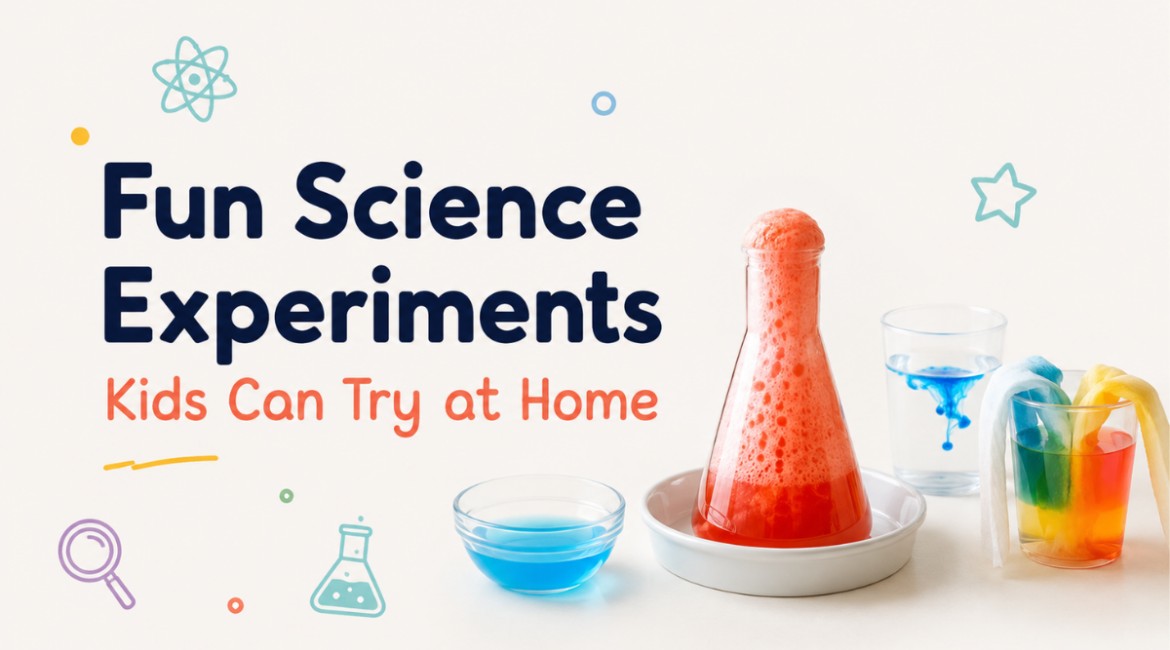
Science becomes exciting when children can see, touch, and explore things with their own hands. Fun science experiments for kids are one of the best ways to encourage creativity, curiosity, and problem-solving skills while making learning enjoyable at home.
Parents often look for easy science experiments that are safe, educational, and require simple household materials. The good news is that many amazing science activities can be done without expensive lab equipment. From colorful chemical reactions to exciting physics tricks, kids can learn important scientific concepts while having fun.
In this guide, you’ll discover some of the best science experiments kids can try at home using everyday items.
Why Science Experiments Are Important for Kids
Science activities help children develop critical thinking and observation skills. When kids perform experiments, they learn how to ask questions, test ideas, and understand cause and effect.
Benefits of science experiments for children include:
- Encouraging curiosity and creativity
- Improving problem-solving abilities
- Making learning interactive
- Building confidence through discovery
- Enhancing memory retention
- Developing patience and observation skills
Hands-on learning also helps children understand school science topics more easily.
1. Baking Soda and Vinegar Volcano
One of the most popular science experiments for kids is the classic volcano reaction. This activity demonstrates a simple chemical reaction in a fun and exciting way.
Materials Needed
- Baking soda
- Vinegar
- Dish soap
- Red food coloring
- Small container or bottle
- Tray for easy cleanup
Steps
- Place the bottle on a tray.
- Add 2 tablespoons of baking soda into the bottle.
- Add a few drops of red food coloring.
- Mix in a little dish soap.
- Pour vinegar into the bottle and watch the eruption.
Science Behind the Experiment
When baking soda reacts with vinegar, carbon dioxide gas forms. The gas creates bubbles that push the liquid out like a volcano eruption.
This experiment teaches children about chemical reactions and gas formation.
2. Rainbow Walking Water Experiment
This colorful experiment is both educational and visually exciting.
Materials Needed
- 6 clear cups
- Water
- Paper towels
- Food coloring
Instructions
- Fill alternating cups with water.
- Add different food colors to the water cups.
- Fold paper towels and place them between the cups.
- Wait several hours and observe the colors “walk.”
What Kids Learn
The paper towels absorb water through capillary action. This demonstrates how plants absorb water from roots to leaves.
Children also learn about color mixing during this experiment.
3. Homemade Slime Experiment
Kids love making slime because it combines creativity with science.
Materials Needed
- White glue
- Baking soda
- Contact lens solution
- Food coloring
Steps
- Pour glue into a bowl.
- Add baking soda and mix.
- Add food coloring.
- Slowly mix in contact lens solution until slime forms.
Scientific Explanation
Slime demonstrates polymer chemistry. The ingredients create stretchy molecular chains that give slime its unique texture.
This is an excellent sensory science activity for children.
4. Floating Egg Experiment
This simple experiment teaches kids about density.
Materials Needed
- Glass of water
- Salt
- Egg
Instructions
- Place the egg in plain water.
- Observe that it sinks.
- Add salt gradually and stir.
- Watch the egg float.
Science Concept
Salt increases water density. Once the water becomes denser than the egg, the egg floats.
This experiment introduces basic physics concepts in a fun way.
5. DIY Lava Lamp
A homemade lava lamp is a fascinating experiment that demonstrates liquid density and chemical reactions.
Materials Needed
- Clear bottle
- Vegetable oil
- Water
- Food coloring
- Alka-Seltzer tablet
Directions
- Fill most of the bottle with oil.
- Add water and food coloring.
- Drop in the Alka-Seltzer tablet.
- Watch colorful bubbles rise and fall.
What Happens?
Oil and water do not mix because they have different densities. The tablet creates gas bubbles that carry colored water upward.
Kids learn about density, gases, and liquid separation.
6. Magic Milk Experiment
This colorful experiment is always exciting for younger children.
Materials Needed
- Milk
- Dish soap
- Cotton swabs
- Food coloring
Steps
- Pour milk into a plate.
- Add drops of food coloring.
- Dip a cotton swab into dish soap.
- Touch the milk surface.
Scientific Explanation
Dish soap breaks down fat molecules in the milk, causing colors to move rapidly.
This activity introduces surface tension and chemistry concepts.
7. Balloon and Static Electricity Experiment
This easy activity teaches kids about static electricity.
Materials Needed
- Balloon
- Small paper pieces
- Wool cloth or hair
Instructions
- Inflate the balloon.
- Rub it on hair or wool.
- Bring it close to paper pieces.
What Kids Learn
Rubbing transfers electrons to the balloon, creating static electricity that attracts lightweight objects.
This experiment explains electric charges in a simple way.
Safety Tips for Science Experiments at Home
Although these experiments are safe, adult supervision is important.
Follow these safety guidelines:
- Use child-safe materials
- Avoid tasting experiment ingredients
- Wear protective clothing if necessary
- Clean the area after experiments
- Keep small items away from younger children
Safety helps children enjoy science responsibly.
How to Make Science Learning More Fun
Parents can make science activities even more engaging by:
- Asking kids questions during experiments
- Encouraging predictions before starting
- Letting children explain observations
- Taking photos of results
- Creating a science journal
Interactive learning improves understanding and keeps kids interested in science.
Educational Benefits of Science Activities
Science experiments help children beyond academics. They improve communication skills, teamwork, creativity, and confidence. These activities also encourage independent thinking and curiosity about the world around them. Many future scientists develop their passion through simple childhood experiments.
Science learning at home can inspire children to explore STEM subjects in school and future careers.
Fun science experiments kids can try at home are an excellent way to combine education with entertainment. Simple activities like volcano eruptions, rainbow water walking, slime making, and floating eggs teach valuable scientific concepts in an exciting and memorable way.