
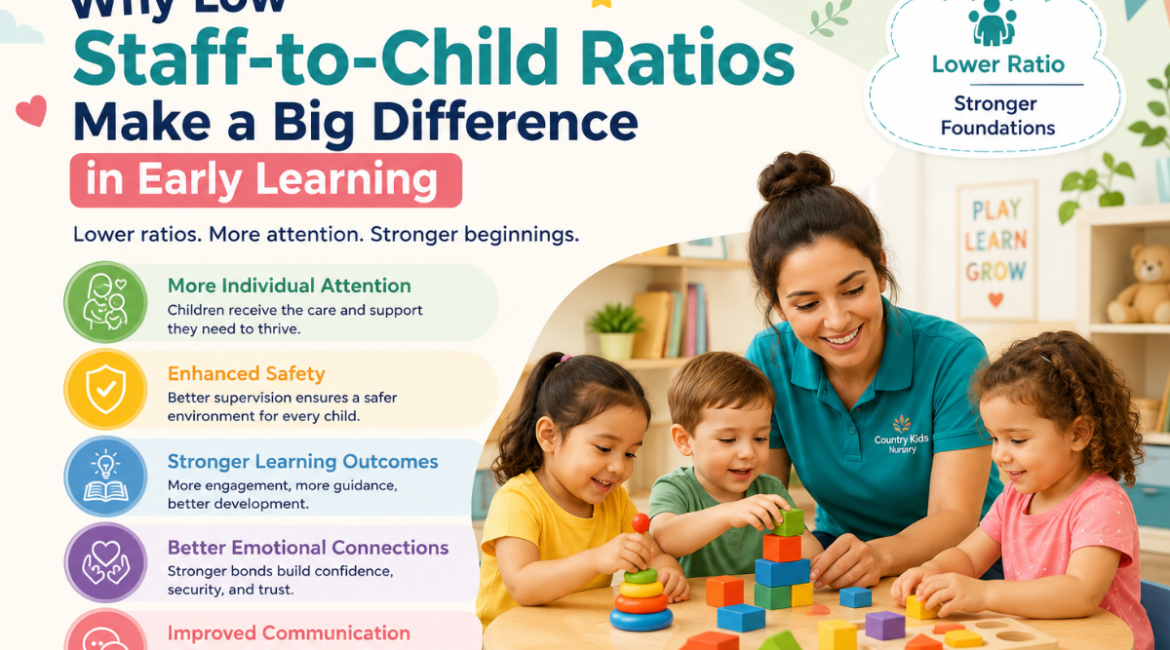
Choosing the right nursery is one of the most important decisions parents make during their child’s early years. While factors such as curriculum, facilities, and location are often considered, one of the most significant indicators of quality childcare is often overlooked: the staff-to-child ratio.
A low staff-to-child ratio means that fewer children are assigned to each caregiver or teacher. This allows educators to provide more individualized attention, stronger emotional support, and better learning experiences for every child.
At Country Kids Nursery, we understand that children thrive when they are seen, heard, and supported as individuals. That’s why maintaining appropriate staff-to-child ratios is a fundamental part of our commitment to delivering exceptional early childhood education and care.
What Is a Staff-to-Child Ratio?
A staff-to-child ratio refers to the number of children assigned to each caregiver or teacher within a nursery setting.
For example:
- A ratio of 1:3 means one caregiver is responsible for three children.
- A ratio of 1:4 means one caregiver is responsible for four children.
- A ratio of 1:8 means one educator is responsible for eight children.
The lower the ratio, the more time and attention each child receives throughout the day.
These ratios are carefully regulated because they directly impact children’s safety, learning experiences, emotional well-being, and overall development.
Why Staff-to-Child Ratios Matter
Early childhood is a period of rapid growth and development. During the first five years of life, children develop critical cognitive, emotional, social, and physical skills that form the foundation for future success.
Quality interactions with caring adults play a major role in supporting this development.
When educators are responsible for fewer children, they can respond more effectively to individual needs, create meaningful learning opportunities, and build stronger relationships with each child.
More Individualized Attention
Every child learns differently.
Some children are naturally confident and eager to explore, while others may need additional encouragement and support.
With lower staff-to-child ratios, educators have more opportunities to:
- Observe individual learning styles
- Recognize developmental milestones
- Identify areas where support may be needed
- Encourage unique interests and talents
- Adapt activities to suit different abilities
This personalized approach helps ensure that no child gets overlooked.
Children receive the guidance they need to progress at their own pace while developing confidence in their abilities.
Stronger Emotional Connections
Young children need secure and trusting relationships with the adults who care for them.
These early relationships help children feel safe, valued, and emotionally supported.
When educators have fewer children in their care, they can:
- Build stronger bonds with each child
- Understand individual personalities
- Respond quickly to emotional needs
- Provide comfort during challenging moments
- Foster a sense of belonging
Children who feel emotionally secure are more likely to participate in activities, engage with peers, and develop a positive attitude toward learning.
These connections create a strong foundation for healthy emotional development.
Enhanced Safety and Supervision
Safety is a top priority for every parent.
One of the most practical benefits of low staff-to-child ratios is improved supervision.
When educators are responsible for fewer children, they can:
- Monitor activities more effectively
- Respond quickly to accidents or concerns
- Ensure children are using equipment safely
- Support children during transitions
- Maintain consistent routines
Active supervision reduces risks and creates a safer environment where children can confidently explore and learn.
Parents can enjoy greater peace of mind knowing their child is receiving close attention throughout the day.
Better Support for Early Learning
Children learn best through interaction.
Conversations, play experiences, storytelling, and guided activities all contribute to early learning and development.
With smaller groups, educators can spend more time engaging with each child through meaningful interactions.
This includes:
- Asking open-ended questions
- Encouraging curiosity
- Supporting language development
- Introducing new concepts
- Extending learning opportunities
Rather than managing large groups, educators can focus on creating rich educational experiences tailored to children’s interests and developmental stages.
Improved Language Development
Language skills develop rapidly during the early years.
Children build vocabulary and communication abilities through daily interactions with adults.
Low staff-to-child ratios allow educators to:
- Engage in more one-on-one conversations
- Read books with individual children
- Encourage verbal expression
- Model new vocabulary
- Support listening skills
Research consistently shows that frequent, responsive interactions contribute significantly to language development.
The more opportunities children have to communicate with attentive adults, the stronger their language foundations become.
Encouraging Social Development
Learning how to interact with others is an essential part of early childhood.
Children begin developing important social skills such as:
- Sharing
- Taking turns
- Cooperation
- Empathy
- Conflict resolution
In smaller groups, educators can guide social interactions more effectively and help children navigate challenges in a supportive manner.
Children receive more opportunities to practice positive social behaviors while building meaningful friendships.
This contributes to greater confidence and stronger interpersonal skills as they grow.
Supporting Children Through Transitions
Transitions can be challenging for young children.
Whether it is starting nursery for the first time, moving between activities, or adapting to new routines, children often require additional reassurance and guidance.
Lower staff-to-child ratios make these transitions smoother because educators can provide:
- Individual support
- Emotional reassurance
- Clear communication
- Personalized encouragement
Children feel more secure when they know a trusted adult is available to help them navigate unfamiliar situations.
Better Observation and Development Tracking
Understanding each child’s progress is a critical part of quality early childhood education.
When educators have manageable group sizes, they can observe children more closely and accurately.
This allows teachers to:
- Monitor developmental milestones
- Assess learning progress
- Identify emerging interests
- Recognize strengths
- Address potential concerns early
Detailed observations help educators create meaningful learning experiences while ensuring every child receives the support they need.
Greater Parent Communication
Strong partnerships between parents and educators contribute significantly to children’s success.
Low staff-to-child ratios allow educators to develop a deeper understanding of each child and communicate more effectively with families.
Parents benefit from:
- Regular updates
- Meaningful feedback
- Developmental insights
- Shared observations
- Collaborative goal setting
This open communication helps create consistency between home and nursery environments.
The Country Kids Nursery Difference
At Country Kids Nursery, we believe that quality childcare begins with meaningful relationships.
Maintaining appropriate staff-to-child ratios enables our educators to provide:
- Individualized learning experiences
- Responsive caregiving
- Enhanced safety and supervision
- Strong emotional support
- Developmentally appropriate guidance
- Effective communication with families
Our approach ensures that every child receives the attention, encouragement, and care they need to thrive during their early years.
We understand that every child is unique, and our nurturing environment allows children to grow at their own pace while developing confidence, curiosity, and a lifelong love of learning.
Investing in Your Child’s Future
The early years play a crucial role in shaping future learning, behavior, and well-being. While many factors contribute to a high-quality nursery experience, staff-to-child ratios remain one of the strongest indicators of effective childcare and education.
A lower ratio means more meaningful interactions, stronger relationships, improved safety, and better learning outcomes.
For parents seeking a nursery that prioritizes individual attention and child-centered learning, understanding staff-to-child ratios is an important step in making an informed decision.
At Country Kids Nursery, we are committed to creating an environment where every child feels valued, supported, and empowered to reach their full potential. By maintaining quality staff-to-child ratios, we provide the foundation children need to learn, grow, and succeed both now and in the future.