
How Sensory Play Transforms Your Child’s Learning Journey
Parents everywhere know the pleasure they bring their child when squishing playdough between their fingers or splashing water during bath time these moments of sensory play serve not just for entertainment but as foundational tools in developing children holistically. Sensory play can serve as an incredible catalyst for learning that extends well beyond entertainment alone.
Creative Home Nursery understands how children thrive when given rich sensory experiences. From finding an educational nursery in Sharjah that prioritizes hand-on learning to improving home environments, understanding sensory play can transform how you support the development of children.
This comprehensive guide examines how sensory activities promote cognitive, motor, and emotional growth in young children. With practical activities tailored specifically for different age groups and learning how to create an immersive sensory environment that sparks curiosity in kids of any age group, this book presents all you need for stimulating brains with play activities!
Benefits of Sensory Play for Cognitive Development
Sensory play can serve as an effective pathway to brain development in young children. By engaging their senses and stimulating these neural connections with sensory play, children develop complex thinking abilities more readily during early years known as neuroplasticity.
By engaging their senses through sensory exploration, children naturally cultivate critical thinking abilities. When toddlers discover that wet versus dry sand feels different to them, this becomes their very first scientific experiment – which also serves to teach cause and effect relationships, problem-solving techniques and logical reasoning skills.
Language development also advances through sensory experiences. Children build their vocabulary through describing textures, temperatures and sensations they experience through sensory activities at quality daycare in Sharjah; such as textures that feel rough or smooth to warm or even “squishy.”
Memory formation strengthens significantly when multiple senses are engaged at once. Research demonstrates that children remember information better when they can touch, see, hear and manipulate learning materials at the same time this multisensory approach to early childhood education forms its core foundation.
How Sensory Play Enhances Motor Skills
Well-designed sensory activities support fine and gross motor development through manipulation. By manipulating different textures and materials, children strengthen the smaller muscles in their hands and fingers preparing them for writing or other precise movements.
Gross motor skills flourish when children navigate sensory-rich environments. Walking across various textured surfaces, climbing obstacle courses or dancing to different musical rhythms helps children build balance, coordination and spatial awareness essential tools for healthy development!
Hand-eye coordination dramatically improves through sensory play activities such as pouring water between containers, threading beads or picking up small objects with tweezers. Children must combine visual input with physical movements in order to be successful completing these activities skills which directly apply to academic tasks like writing or drawing.
Bilateral coordination involves both sides of the body simultaneously and can be nurtured naturally through sensory activities such as dough kneading or paper tearing, where both hands work simultaneously on these activities to form neural pathways essential to future academic success.
Emotional and Social Development Through Sensory Play
Sensory experiences provide children with healthy outlets for emotional expression and regulation. Water play or satisfying resistance playdough may help children manage overwhelming emotions while building self-soothing strategies to cope.
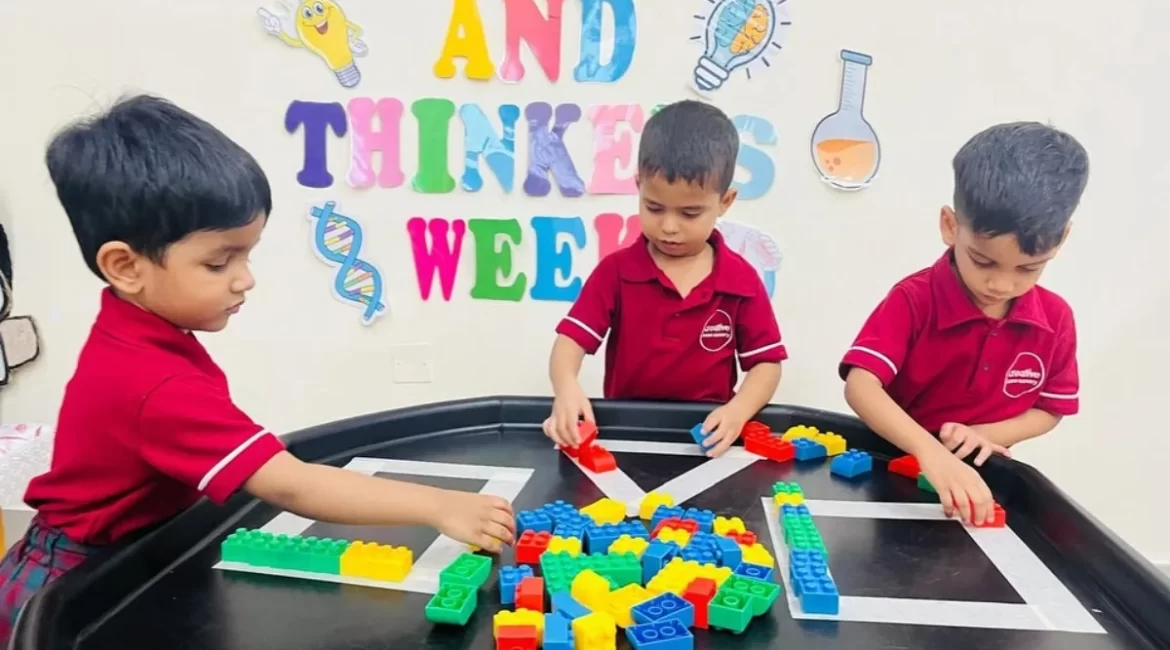
Social skills naturally emerge during group sensory activities. Children practice communication, empathy and cooperation when sharing materials among themselves while working collaboratively on sensory projects together. A well-structured preschool in Sharjah facilitates this interaction while offering children opportunities to observe one another and learn through imitation.
Sensory play promotes confidence and independence among children. They feel empowered when allowed to explore materials freely on their own and make discoveries independently, encouraging a positive sense of self-worth as well as risk taking in learning situations.
Sensory engagement can provide natural stress reduction for children. Engaging in sensory play requires focused attention that fosters mindfulness practice and builds emotional resilience that will serve them throughout their lives.
Practical Sensory Play Activities for Different Ages
Infants (0-12 Months)
Simple textures provide babies with valuable learning experiences. Give fabric squares with various textures, soft toys with various surfaces, wooden spoons or silicone spatulas as safe household objects that introduce temperature variations as well as cause and effect relationships during bath time playtime.
Toddlers (1-2 years)
Add more sensory experiences through edible finger paints, pasta or rice bins filled with sensory textures, simple musical instruments and playdough that is safe if tasted; also explore sand and water tables as exploration opportunities!
Preschoolers (3-5 years)
Engaging preschoolers in sensory activities that challenge growing minds is both entertaining and beneficial to development. Creating themed sensory bins, introducing measuring tools during water play sessions and discovering nature through outdoor scavenger hunts are just a few ways complex sensory activities can bring their senses alive – not to mention cooking activities which combine multiple senses while teaching practical life skills!
School-age children (5+ years)
Advanced sensory projects for school-age children include science experiments, gardening activities and artistic endeavors using various materials and textures these projects combine sensory learning with academic concepts.
Tips for Creating a Sensory-Rich Environment at Home
Establish sensory play zones to minimize mess while encouraging free exploration. A small table with washable surfaces, nearby storage for materials, and easy clean-up supplies makes sensory play more manageable for busy families.
Change sensory materials regularly to maintain interest and introduce different experiences to users. Keep different collections separate, introducing new pieces every week so your activities remain fresh and engaging.
Bring natural materials into play whenever possible. Pine cones, smooth stones, shells and leaves offer stimulating textures while drawing children closer to nature; sometimes more so than manufactured toys!
Safety must always remain of primary importance in sensory play. Select age-appropriate materials, supervise activities closely, and keep play spaces clean to ensure continued safe exploration. Routine material inspection ensures continued exploration safely.
Document your child’s sensory journey using photos and observations. Doing this helps identify preferences, monitor developmental growth and share valuable info with teachers and caregivers.
Building Foundations for Lifelong Learning
Sensory play provides more than simple child entertainment: its experiences create neural pathways, foster essential skills development and enhance emotional well-being to support life-long learning. By understanding and implementing sensory-rich activities for your children’s cognitive, physical and emotional growth.
Sensory play can enhance both individual development as well as family bonding and joyful shared experiences. From nurseries in Sharjah that prioritize hands-on learning to creating memorable learning moments at home, sensory play provides an avenue for holistic child development.
At Creative Home Nursery, we see daily how sensory rich environments transform children’s learning experiences. By encouraging sensory play for your child’s enjoyment as they build the basis of future success and well-being.