

There is something quietly revolutionary happening in early childhood classrooms around the world. Educators are putting down the tablets, switching off the projector screens, and doing something that humans have done for tens of thousands of years gathering children close and simply telling a story. No animation. No background music. No glowing device. Just a voice, a room full of wide eyes, and the timeless magic of spoken narrative.
This return to oral storytelling in preschool and nursery settings is not a nostalgic trend. It is a thoughtful, evidence-informed response to growing concerns about screen dependency in early childhood and a rediscovery of something child development practitioners have long championed: the spoken story is one of the most powerful developmental tools available to a young child.
Why Nurseries Are Choosing Story Over Screen
The last decade watched early childhood education embrace digital tools with real enthusiasm. Interactive whiteboards, learning apps, and animated educational videos became everyday fixtures in nursery classrooms. While technology certainly has its role, many practitioners began noticing an unsettling pattern forming beneath the surface:
- Children were becoming passive consumers of ready-made content rather than active, imaginative participants in their own learning
- Attention spans were shortening, particularly during activities that required listening without visual stimulation
- Creative and symbolic play was declining in children who had high screen exposure at home
- Many young children struggled to follow a spoken story without accompanying images or movement on a screen.
What Happens Inside a Child’s Mind During Oral Storytelling
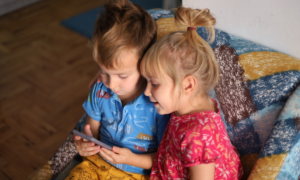
At Creative Home Nursery, these observations became the starting point for a meaningful shift. Early years practitioners began exploring what genuinely screen-free learning could look and feel like inside a warm, home-inspired environment and oral storytelling quickly emerged as the heartbeat of that vision.
When a young child listens to an oral story, something extraordinary unfolds across multiple layers of development all at once. Unlike passive screen viewing, listening to a live storyteller demands active cognitive participation. The child must construct every image entirely within their own mind, drawing on vocabulary, memory, and imagination to build a vivid internal world from nothing but words and tone.
This process directly strengthens several critical developmental capacities:
- Narrative comprehension — the ability to follow a sequence of events, understand cause and effect, and anticipate what might come next
- Working memory — holding earlier parts of the story in mind while absorbing new information
- Sustained attention — practising focus without the reward of constant visual stimulation
- Predictive thinking — using story logic to guess outcomes, a precursor to mathematical and scientific reasoning
Language Growth That Sticks
Oral storytelling deepens vocabulary in a way that feels entirely natural to young children. When they hear expressive, carefully chosen language delivered with rhythm, warmth, and pace, new words arrive wrapped in meaning. Children do not meet vocabulary as isolated items on a list. They encounter words as living, breathing parts of a story they are emotionally invested in.
This contextual approach to language acquisition is far more effective than direct instruction for children in their early years. Words heard inside a story are remembered because they carry feeling, image, and narrative weight. A child who hears the word “trembling” used at the exact moment a small rabbit hides beneath a moonlit leaf understands that word in a way no flashcard could ever replicate.
Storytelling as an Emotional and Sensory Experience
The preschool years are shaped by sensory and emotional learning. Young children feel everything intensely and are only just beginning to find words for what moves inside them. Oral storytelling meets this beautifully.
A skilled early years practitioner does not simply recite words from memory. They bring the full range of human expression to the telling:
- Varying their voice in pitch, pace, and volume to build tension or tenderness
- Using deliberate pauses that invite children to lean in and wonder
- Offering meaningful eye contact that makes each child feel seen and included
- Using subtle gesture or facial expression to bring characters vividly to life
- Reading the energy of the room and shaping the story accordingly
This kind of storytelling also functions as emotional education. Characters who experience fear, confusion, loss, or unexpected joy give children a safe and gentle container for processing their own inner lives. A little hedgehog who is nervous about the first cold night of winter and finds courage anyway is not just a charming character. For a three-year-old sitting on a cushion with their knees tucked up, that hedgehog is a companion and a quiet mirror.
Giving Imagination Room to Breathe
Perhaps the most compelling case for screen-free storytelling is what it demands from the child’s own imagination. Digital media delivers a finished world. Every character, colour, and landscape is pre-rendered and presented. The child’s inner creative life is not invited to participate it is simply shown what to see.
Oral storytelling does the complete opposite. It places the creative work directly in the hands and minds of the children. When a practitioner describes a small house perched at the top of a windy hill with a door painted the colour of autumn berries, every single child in that room sees something different. One imagines stone walls. Another pictures a wooden door. The story is the seed. The child’s imagination is the soil, the weather, and the growing thing all at once.
Rooting Children in Culture, Community and Belonging
Oral storytelling has always been the way human communities carry their wisdom, values, and identity across generations. When nurseries bring these traditions back into the room, they offer children something that goes far beyond a single story.
At Creative Home Nursery, practitioners draw intentionally from a wide range of storytelling traditions, reflecting the rich cultural backgrounds of the children and families they serve:
- Tales rooted in South Asian folklore that centre on cleverness, generosity, and natural wonder
- Stories drawn from African oral traditions that celebrate community and interconnection
- Narratives from Celtic and European heritage that explore seasons, transformation, and courage
- Original stories created by practitioners themselves, shaped around the specific children in the room
Families are warmly invited into this storytelling community. A grandmother who carries a story from her childhood, a father who remembers a tale his own parents told, a family whose traditions are rarely represented in mainstream early-years settings all are welcomed to bring their voices into the nursery circle. This belonging is not a small thing for a young child. It is one of the deepest roots of emotional security and confident identity.
A Practice That Needs Nothing But Presence
The profound beauty of oral storytelling is how completely accessible it is. It requires no budget, no screen, no subscription, and no technical skill. What it asks for is time, genuine presence, and a belief in the power of a human voice to do something that technology simply cannot replicate.
As nurseries like Creative Home Nursery continue to build screen-free storytelling into the fabric of daily life, they are not retreating from the modern world. They are doing something far more ambitious. They are giving children a rich inner life stocked with language, imagery, empathy, and wonder that will quietly support everything else they ever learn or become.